
Muzz aims to create a respectful and faith-focused community where Muslims can meet compatible partners with shared faith and values.
.png)
In this project, I collaborated closely with a cross-functional team, including a product manager, data scientist, QA engineer, front-end and backend engineers. Together, we focused on enhancing the match rate for users within their first 24 hours on the platform.
In this project, I collaborated closely with a cross-functional team, including a product manager, data scientist, QA engineer, front-end and backend engineers. Together, we focused on enhancing the match rate for users within their first 24 hours on the platform.
While reviewing the data, I discovered that 12% of new female members on Bumble didn’t receive a match within their first 24 hours because they hadn’t sent a like to others. This not only negatively impacted their overall experience, but also created a ripple effect, diminishing the experience for male users as well.
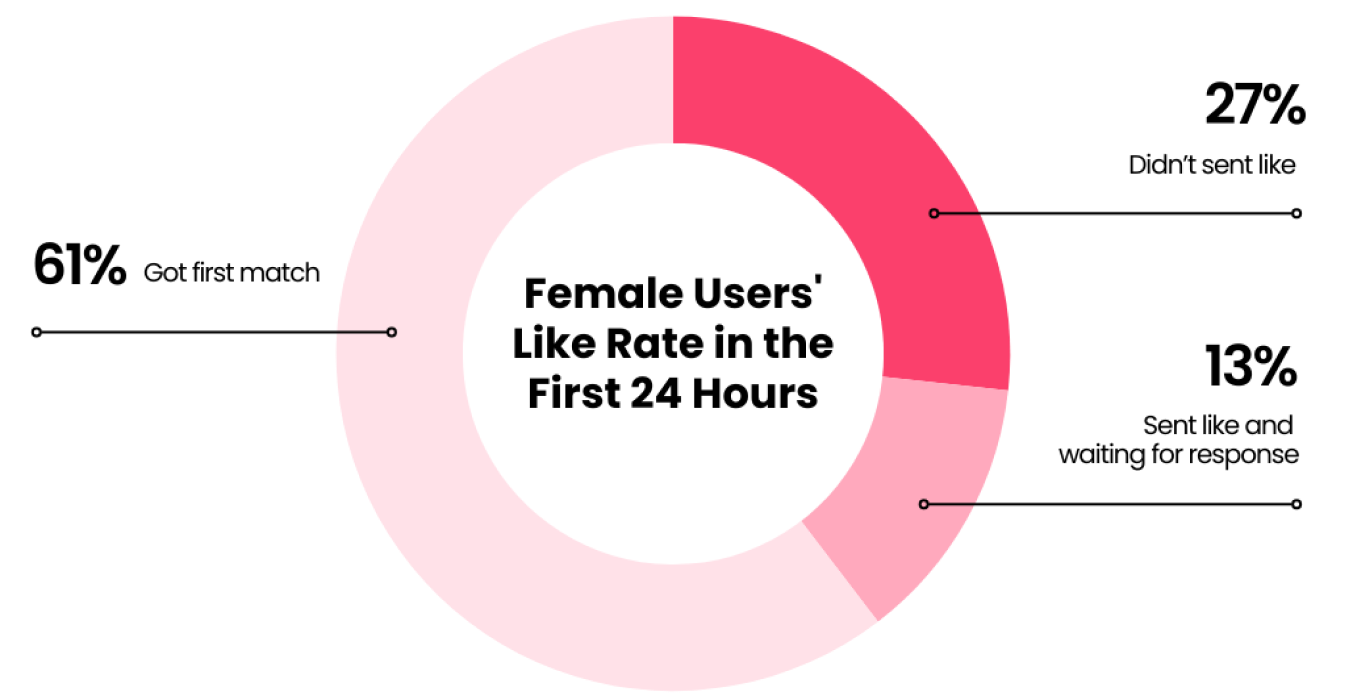
The data revealed that this issue was universal across countries, so our project’s scope extended globally rather than focusing on specific regions. By increasing likes sent by new female users by 10%, we aimed to improve engagement and help both female and male users have more successful matches, enhancing the app experience for everyone.
To understand why some users weren’t sending likes, I conducted user interviews with female members across different countries. Additionally, I collaborated with local marketing specialists to gather their insights and feedback, ensuring a more comprehensive understanding of the cultural factors at play.

Female users expressed frustration that the profiles they were shown didn’t align with their expectations.
%201.png)
%201.png)
Many first-time users felt overwhelmed by the number of profiles and hesitant to act due to unfamiliarity with dating/marriage apps.
Many first-time users felt overwhelmed by the number of profiles and hesitant to act due to unfamiliarity with dating/marriage apps.
Female users expressed frustration that the profiles they were shown didn’t align with their expectations.
%201.png)
To develop a better algorithm that shows more compatible profiles, active user participation is essential. That’s why our priority is addressing users' psychological concerns first—encouraging them to engage confidently so the algorithm improves over time.
%201.png)
To foster ideas, I organised and led a brainstorming workshop with the UX team, where I presented the project background and outlined the key problem we aimed to solve.
.png)
We generated many ideas during the brainstorming session, but to narrow our focus, I asked the team to vote on their two favourite ideas. This helped us prioritise the solutions with the greatest potential to address the problem effectively.
Users shared that they don’t like sending a "like" first. What if we used a more neutral, universal symbol instead?
%202.png)
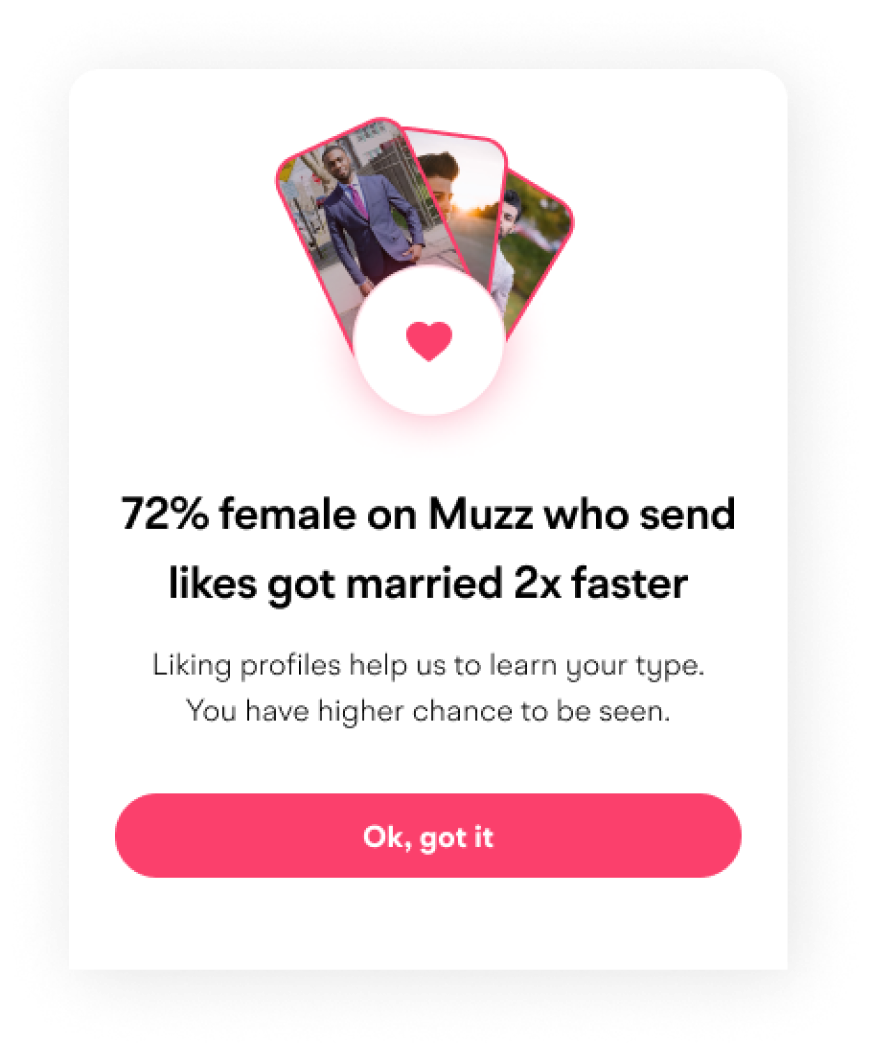
Using the social proof effect to show the positive impact of sending likes to encourage liking behaviours
Using the social proof effect to show the positive impact of sending likes to encourage liking behaviours
Introducing gamification elements could make browsing profiles more engaging and enjoyable, encouraging users to interact more frequently.
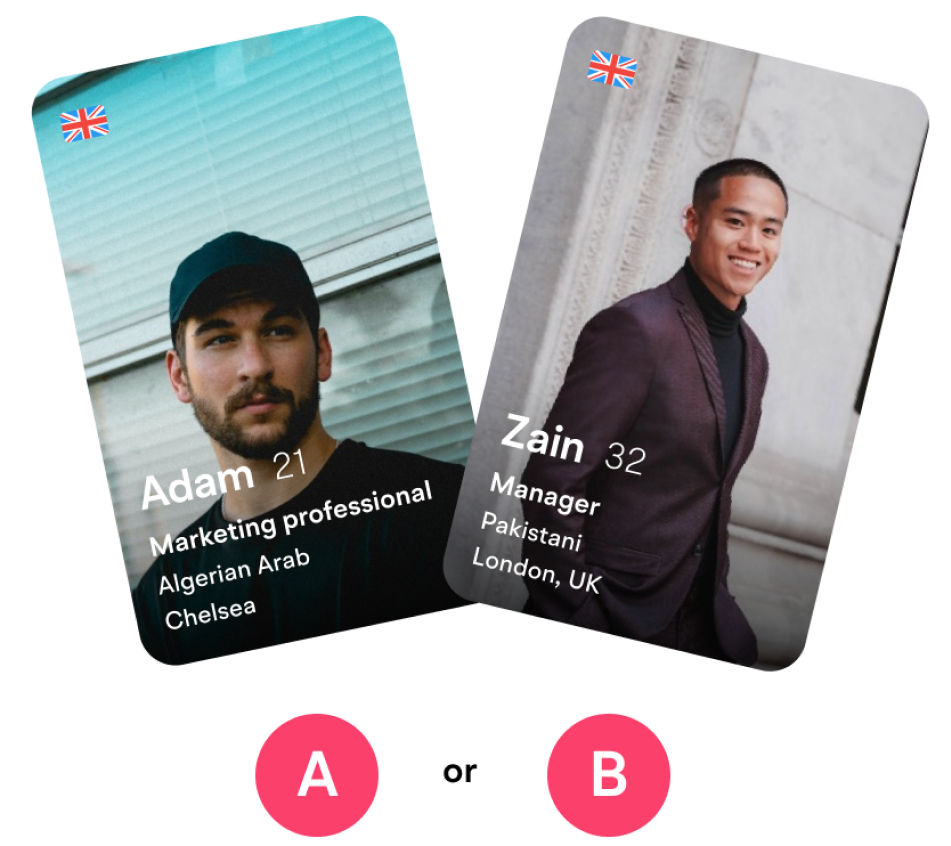
Educating users on how sending likes helps refine their profile recommendations could motivate them to engage more.
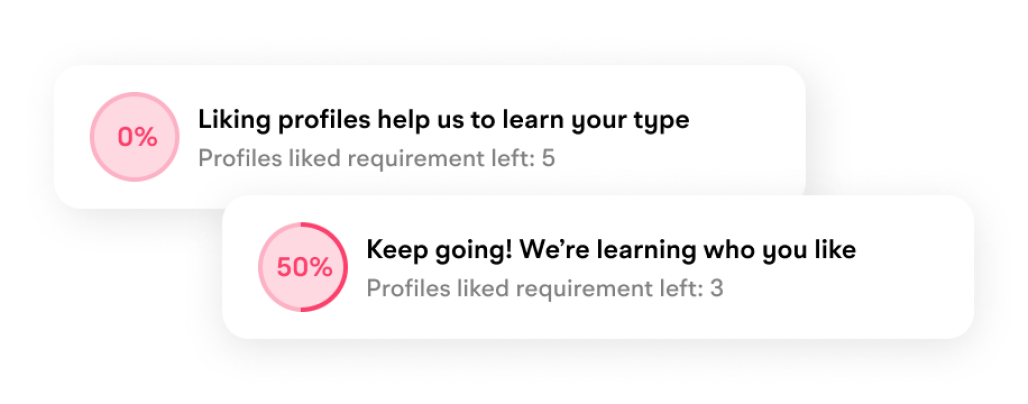
Educating users on how sending likes helps refine their profile recommendations could motivate them to engage more.
%201.png)
My goal was to encourage users to express interest without feeling like they’re coming on too strong. I selected three universally recognised icons—thumbs up, checkmark, and smile—that people commonly use to show interest.To ensure we chose the best icon to help users express interest subtly, I conducted user testing in new markets, gathering insights to validate the most effective option.

I explored various design ideas to ensure the card was both visually appealing and informative, allowing users to understand the feature and track their progress effectively.
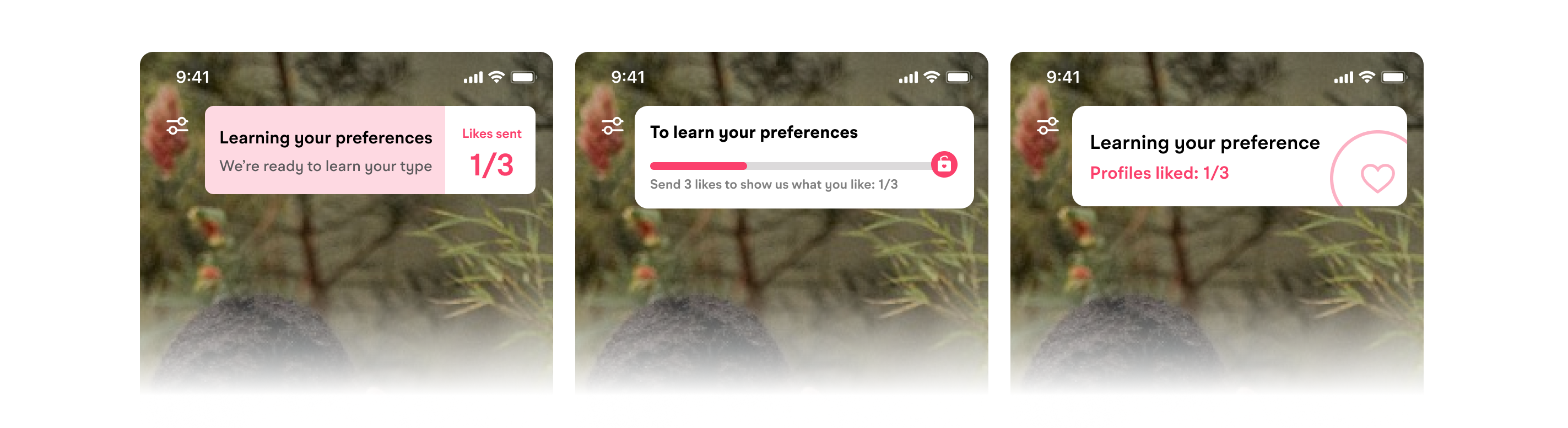
To effectively track the impact of different solutions, we collaborated and decided to release the icon change for female users across all markets, starting with a single device. This strategic approach allowed us to closely monitor results before implementing further changes, while also developing the the learning your preference design
%202.png)
We generated many ideas during the brainstorming session, but to narrow our focus, I asked the team to vote on their two favourite ideas. This helped us prioritise the solutions with the greatest potential to address the problem effectively.
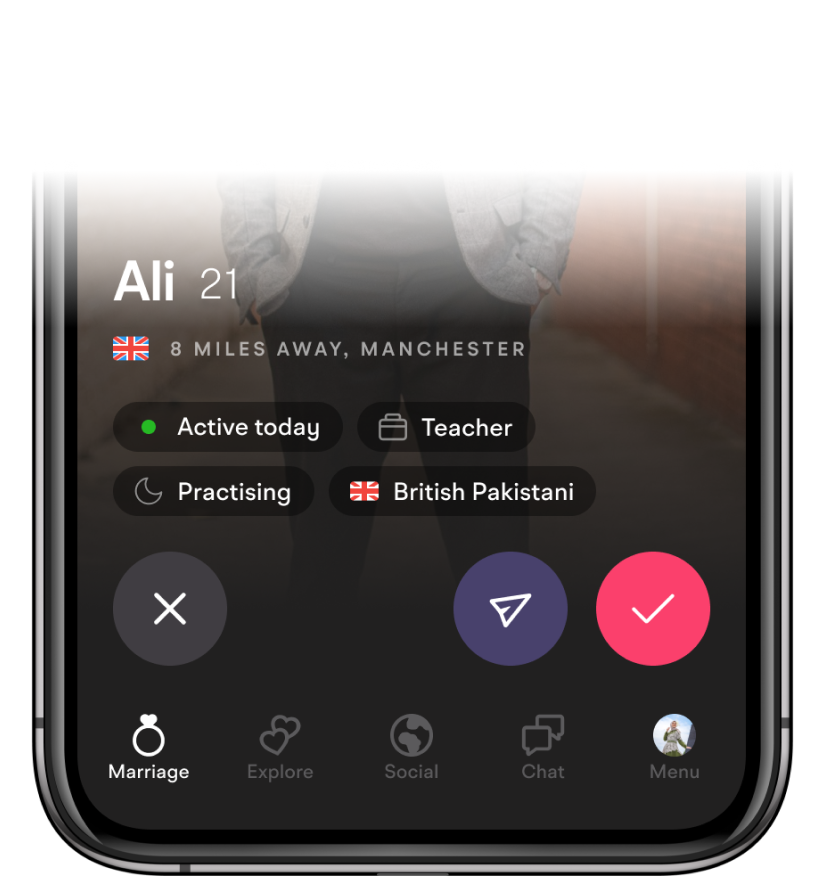
with the icon change from heart to tick
with the icon change from heart to tick
with the learning your preference feature
.png)
.png)


